Allyship isn’t a destination, it’s a discipline.
At Male Allies UK, we often remind our participants that allyship is not about perfection, it’s about persistence. Yet even the most well-intentioned men can fall into habits that slow progress or unintentionally reinforce the very systems they want to change.
That’s why we talk openly about common mistakes – missteps that turn good intentions into missed opportunities. Recognising these patterns is not about shame; it’s about awareness. Once we can name them, we can change them.
You can also view these mistakes visually as a gallery at the end of the post.
Common male allyship mistakes
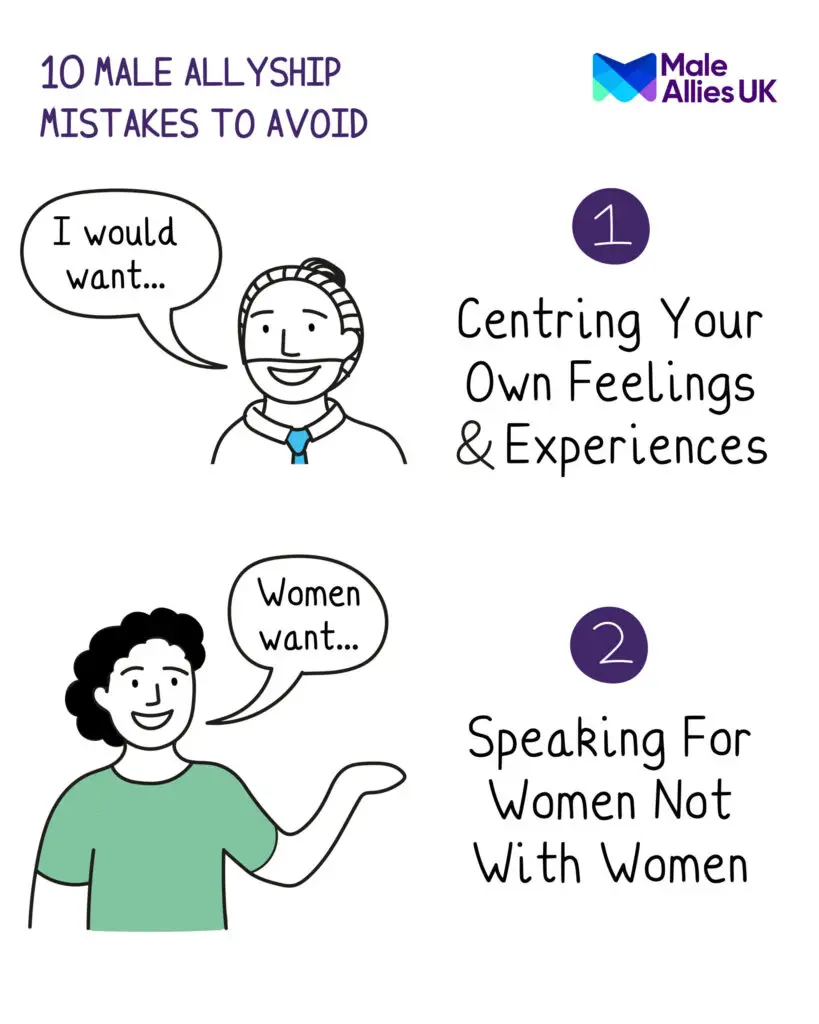
1. Centring your own feelings and experiences
Allyship begins to unravel when it becomes self-referential – when men focus more on how they feel than on how others are affected.
We hear it in phrases like “I didn’t mean it that way” or “This makes me feel attacked.” These reactions are human, but they centre yourself and not the marginalised people you’re supposed to be an ally to.
True allies stay curious – they recognise discomfort as part of growth and resist the urge to recentre themselves in conversations about inequity. The question shifts from “How do I feel?” to “What can I learn?”
2. Speaking for women, not with women
Many men step forward too fast, using their platforms to ‘speak on behalf of’ women rather than alongside them. The intention is often good – amplification – but the impact can be silencing.
Effective allyship is collaborative, not performative. It involves asking, “Whose voice belongs here?” and “How can I use my influence to ensure it’s heard?”
Allies know to take direction from those they’re supporting. They know to listen to and not speak for women.
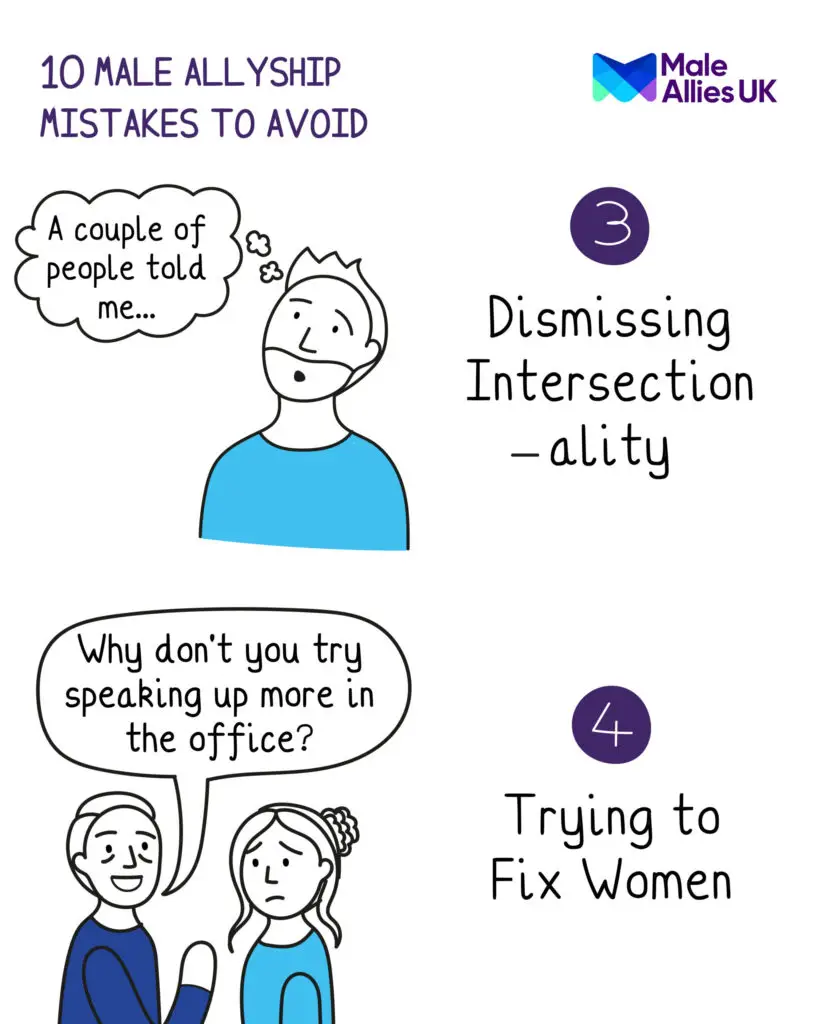
3. Dismissing intersectionality
Allyship loses depth when it treats women as a single group. Not all women experience work, leadership, or bias in the same way. Race, class, sexuality, disability, and age all shape experiences.
When men overlook this intersectionality, they risk reinforcing the same narrow systems that inclusion is meant to dismantle.
Strong allies learn to listen across difference – understanding that gender equity is inseparable from racial justice, accessibility, and broader social equality. Inclusion means seeing complexity, not avoiding it.
4. Trying to fix women
One of the oldest patterns in gender equity work is the idea that women need to be fixed. Think confidence coaching or women being told they should be more assertive or resilient. This framing misses the point.
Women don’t need fixing; systems do.
The role of male allies is not to advise women on how to adapt – it’s to challenge structures that disadvantage them. Biased promotion criteria, exclusionary cultures, and double standards in performance expectations.
Allyship means shifting from “How can I help women change?” to “What must we change in the system?”
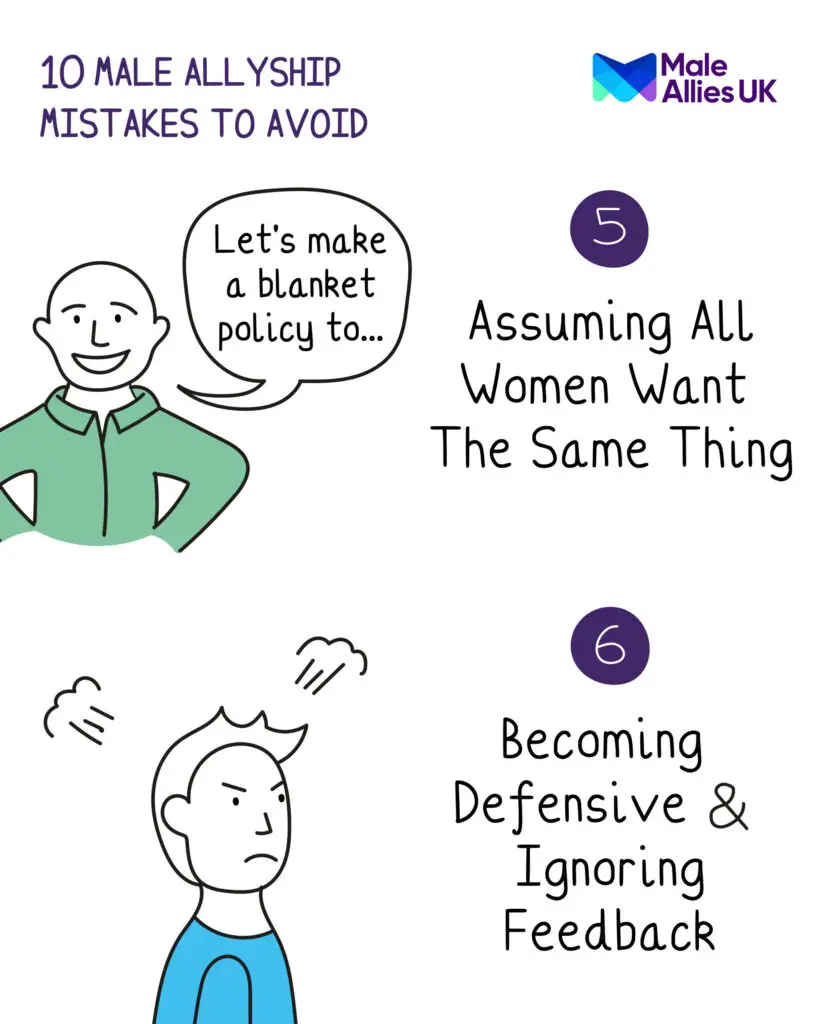
5. Assuming all women want the same thing
Even well-meaning allies can fall into the trap of assumption – believing there’s one universal ‘female perspective’. In reality, women’s experiences and ambitions are diverse.
Some want visibility, others value flexibility or safety. Some are vocal, others strategic. This is why allies must ask, not assume.
Listening individually – rather than generalising collectively – builds trust. It shows that allyship is about partnership, not prescription.
6. Becoming defensive and ignoring feedback
Feedback is the fuel of allyship. Yet when men are told they’ve said or done something exclusionary, defensiveness can surface fast.
Common responses like “I didn’t mean it like that,” or “You’re overreacting” close the door on growth. Effective allies listen, thank, reflect, and adjust.
Allyship requires humility: the willingness to be corrected without collapsing into guilt. It’s about progress, not perfection.
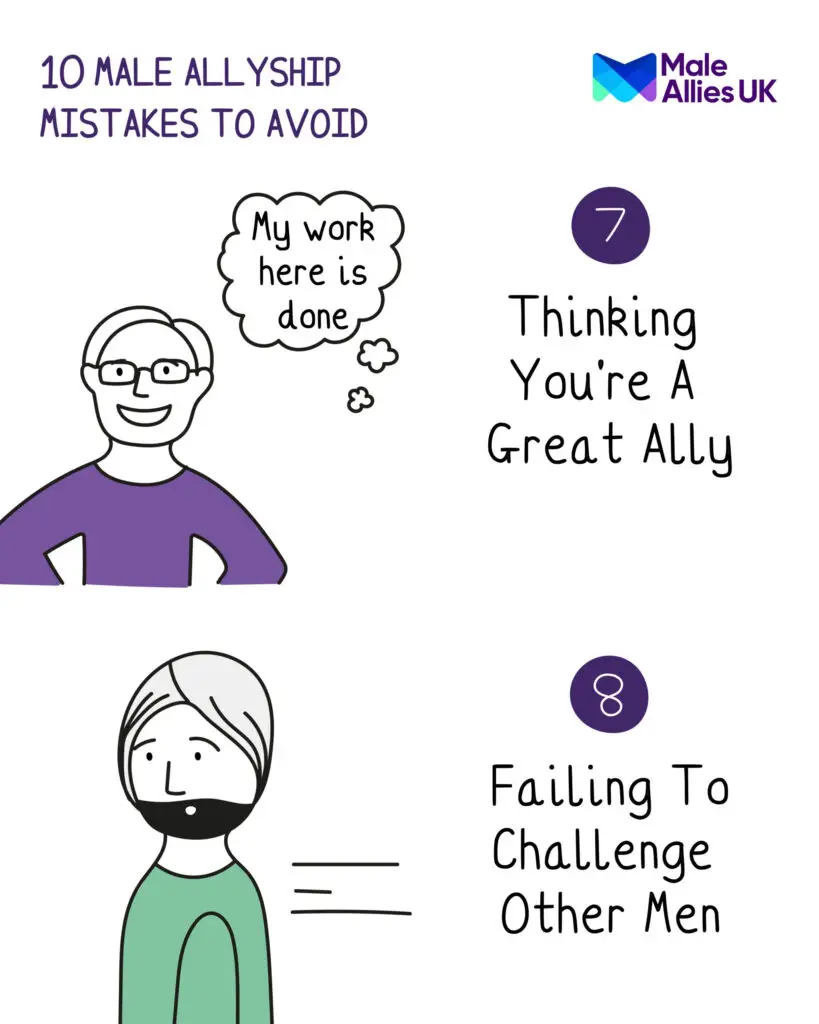
7. Thinking you’re a great ally
The moment someone decides they’ve ‘arrived’ as an ally is usually the moment learning stops.
Allyship isn’t an identity to claim; it’s a practice to maintain. The best allies we’ve seen are the ones who describe themselves as learners – who ask for feedback, who stay curious, who treat allyship as ongoing, not achieved.
Confidence without reflection can slip into complacency. True leadership lives in the tension between both.
8. Failing to challenge other men
Perhaps the hardest but most essential role of a male ally is speaking up to other men. It’s uncomfortable, especially in peer groups, leadership teams, or social circles. But culture changes when conversations do.
Silence protects comfort, not progress.
Allies who challenge constructively – with courage and respect – create new norms. They shift what’s acceptable, what’s rewarded, and what’s expected. This is where allyship becomes leadership.
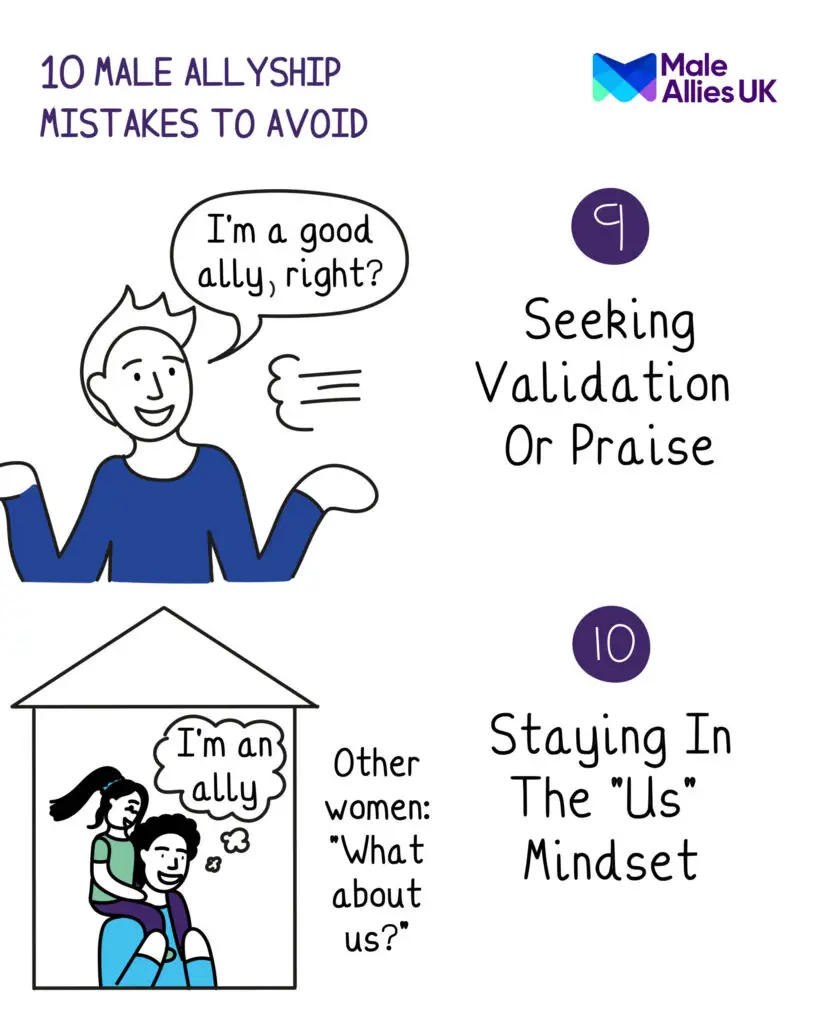
9. Seeking validation or praise
When allyship becomes about recognition – social approval, awards, or performative gestures – its integrity erodes. Real allies act whether or not anyone notices.
Validation from others can’t be the goal. The work itself – fairer systems, better representation, healthier cultures – is the reward.
10. Staying in the ‘us’ mindset
Being a good ally to one person you’re close to – like a daughter or friend – doesn’t make you a good ally.
Staying in the ‘us’ mindset ignores what we’ve talked about above about intersectionality and women not all wanting the same thing.
Allyship means adapting to the women around you. Listen to their needs, adopt an open mind, and adapt accordingly.
From missteps to momentum
These mistakes are common precisely because allyship is complex. It asks men to balance action with humility, influence with listening, and courage with care.
That’s why we combine these lessons into our broader frameworks:
- The Male Allyship Continuum helps men identify where they are starting from
- The CAUSES Framework builds the internal motivation and skillset for growth
- And our 8 Tenets of Male Allyship show what positive, daily practice looks like
Together, these tools turn mistakes into momentum – helping men move from intention to consistent, confident action.
Building accountability and learning
At Male Allies UK, we create spaces where men can reflect honestly, learn from feedback, and keep improving without shame. Our workshops and coaching programmes focus on skill, not status – because allyship isn’t about being right, it’s about doing right.
When men recognise and repair these missteps, they become role models for inclusion. And when organisations support that learning, culture changes for good.
If your organisation wants to help men move from awareness to accountable action, we’re ready to help. Because allyship isn’t about avoiding mistakes – it’s about learning from them.