
In February 2026, something big happened in Parliament, but the story started long before that. After nine months of work behind the scenes with Dr Tim Shand and Lisa Raferty, the Cross-Sector Task Force on Online Misogyny and Men’s Mental Health was officially launched.
This wasn’t a quick campaign or a single conversation. It was the result of sustained collaboration – bringing people together across sectors to build something intentional and impactful. From early discussions to shaping a shared direction, the focus was always on collaboration and cohesion.
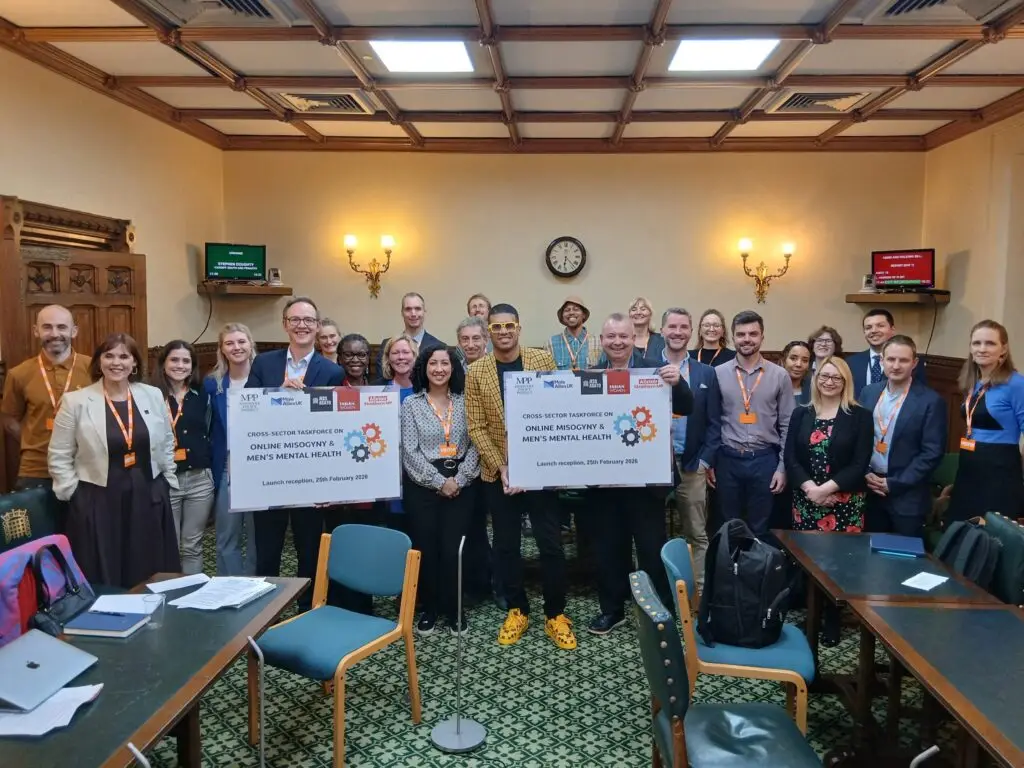
The Task Force recognises that the challenges of online misogyny and men’s mental health don’t sit in isolation. Too often, these issues are treated separately – online harms on one side, men’s wellbeing on the other. A cross-sector group can challenge that, showing how things like harmful online content, identity, belonging, and mental health are interconnected. That opens the door for more holistic policy responses rather than fragmented interventions.
We talked about how to deepen collaboration across a wide range of voices – from those working in mental health, education and online harms, to organisations focused on men and boys, women and girls, as well as representatives from trade unions, the cultural and sports sectors, funders and MPs. Because ultimately, no single part of the system can solve this alone.
Rather than focusing only on challenges, we discussed a range of policy solutions and shared what we thought the Government should be focusing on at the National Summit on Men and Boys. We have a strengths-based approach to engaging men and boys, one that’s positive and aspirational rather than accusatory or judgemental.
For us at Male Allies UK, this reflects what allyship is all about. It’s not performative. It’s not instant. It takes time, effort, and persistence. It builds bridges to allow us to work together – for the good of us all.
Nine months of work for one moment in Parliament. But the real impact is what happens next.